

Product Guide: LBTC Security and Transparency
July 14, 2025
3 minutes read


The Lombard Protocol and its associated products adhere to industry best practices and security standards designed to ensure resilience, transparency, and decentralization at every layer. These best practices span everything from onchain attestations and public audits to decentralized key management and incident response.
Security features include:
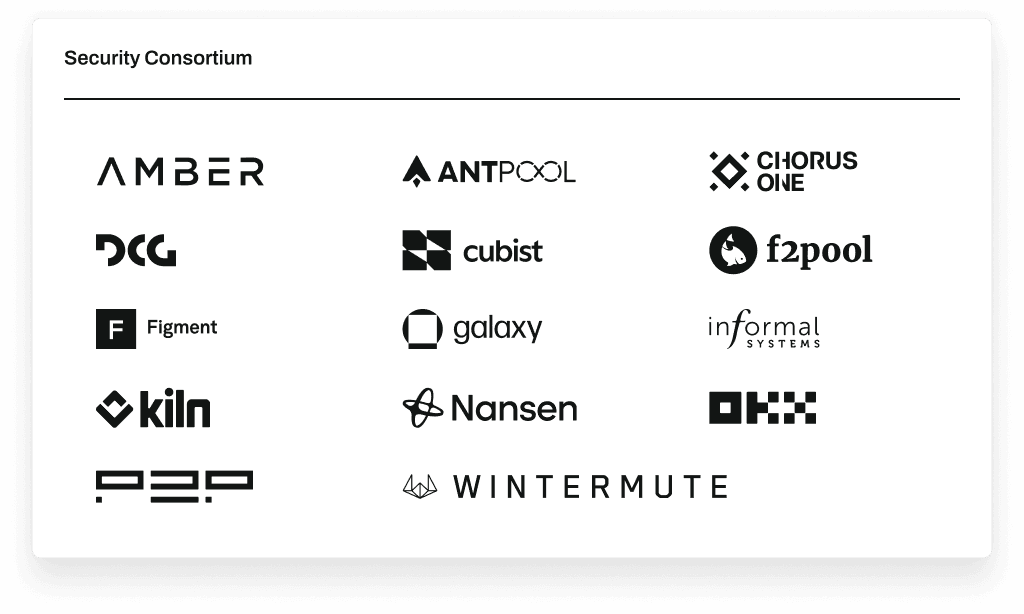
- Trust-minimized decentralized structure - A Security Consortium of 14 leading institutions, staking providers, and market makers validating every transaction on the protocol
- Hardware-isolated key management with Cubist’s CubeSigner HSM
- Multi-factor checks and automated delayed withdrawals
- Audited by Cantina, Veridise, Halborn, Open Zeppelin, Sherlock
- An evergreen bug bounty program with Immunefi offering $250K to whitehat hackers
- Full time monitoring using vendor's like Hexagate to ensure 24/7 protection and proactive security response frameworks enabling swift remediation in partnership with third-party experts.
Transparency features include:
- Publicly auditable mint/burn logs
- Real-time Proof-of-Reserves oracle
- Onchain stake attestations providing real-time verification
- Fully traceable off-chain/on-chain transactions
Security
For best in class security, Lombard employs a trust-minimized and layered security model that leverages a consortium of some of the largest institutions in crypto as the root of trust. The Consortium includes Galaxy, DCG, OKX, Wintermute, Amber, Antpool, F2pool — and involves a set of multiple checks and balances to ensure no single point of failure (consortium, off-chain policies, Cubist bascule, timelocks).
Key management and a robust set of programmatic policies cryptographically restrict the actions the Lombard Consortium can take, preventing malicious actions or actions not intended by the Lombard Protocol. Multi-factor approvals, withdrawal delays, and timelocks are required as an extra precaution. Lombard has the Cubist team, cryptographic experts and Carnegie Mellon Professors, onboard as security advisors.
Smart Contract Audits & Bug Bounties:
All Lombard code that goes into production is audited twice by leading auditors, as well as multiple reviews internally (Lombard has a full-time Security engineer). In addition, major releases undergo contest audits to battletest before release.
- The OpenZeppelin Consortium Report
- The Halborn Consortium report
- The Halborn smart contract report
- The Veridise smart contract report
- The Immunefi Bug Bounty Program ($250k)
- Immunefi Contest Audit
LBTC: Cross-Chain Security and Price Reliability
LBTC can be transferred/deposited across Ethereum, Base, Sui, Sonic, and BNB Chain via Chainlink CCIP, ensuring secure bridging across supported chains. Every transaction requires being approved by both the Lombard Security Consortium and CCIP validators , reducing the risk of unauthorized minting.
Since launch, Lombard has seen no depeg events. LBTC is the most liquid Bitcoin LST on the market, supported by $100+ million in DEX liquidity across chains, supported by a major market maker. Lombard’s LBTC is exclusively backed by native BTC and has been fully redeemable since its launch.
Lombard is the first BTC LST to implement a proof-of-reserves oracle built in collaboration with Redstone & Chainlink. Lombard’s reserves are viewable in real-time on our proof of reserves page. PoR oracle provides crucial transparency and reassurance in the solvency of Lombard’s BTC balances, consequently disincentivizing LBTC liquidations below redemption value and further strengthening the peg.
Lastly, Lombard has implemented multiple layers of active monitoring to detect malicious activities, with independent invariant checks (Cubist Bascule), automated pausing capabilities (via Hexagate) and incident response via PagerDuty.